
I’ve been watching Yellowjackets, and while I find it compelling, it also challenges me. The series offers no illusion of comfort. We are shown dark scenes of gratuitous violence, cannibalism, and anti-human ritual within a warped moral framework. And yet… I keep watching. Why? What is it about this show that draws me back, even as it confronts me with a worldview soaked in blood and selfishness, draped in a thin veil of mysticism?
Maybe it speaks to something primal, something older than we care to admit. The ancients didn’t flinch from tales of bloodletting, betrayal, and animal transformation. They gathered around fires and told stories of monsters in the woods and gods who demanded sacrifice. In this sense, Yellowjackets taps into a deep cultural rootstock—our ancestral taste for the terrible. Or maybe I just like the characters. Malevolent though they’ve become, I care about them. Which means, in some sense, I’m in a toxic relationship with them. Their survival is my investment, and their descent is my price.
Yellowjackets Place within the Folk Horror Tradition
To be fair, Yellowjackets dabbles in a variety of genres, including courtroom drama, forensic police procedural, and even the light comedic touch of the “citizen detective” thread. But at its black core, a rope of folk horror coils around the entire structure, dangling it over our heads, just out of reach.
But Yellowjackets doesn’t deliver folk horror in a straightforward manner. Traditionally, folk horror begins with an outsider discovering an insular group with dark traditions (The Wicker Man, Blood on Satan’s Claw). But here, the protagonists become the insular group. The girls don’t uncover folk horror—they build it. They craft the antlered queen, the symbols, the sacrifices. They are both victim and architect. It’s a horror of emergence rather than intrusion. The haunting comes from within.
The Occult Thread: Not Just Symbolic
At the center of Yellowjackets is a mysterious force—call it “The It,” as the characters do. It’s never quite personified, never wholly defined, and that makes it all the more dangerous. This is where the show veers into occult terrain—not in the Hollywood sense of witches and wands, but in the esoteric sense of force, intent, and transaction.
In real-world magickal practice, particularly within Hermetic or chaos magick traditions, the practitioner is not summoning a bearded deity. Rather, they are interacting with currents of power—natural, psychological, archetypal. The forest in Yellowjackets is one such current. The girls don’t pray to it; they appease it. Sacrifices are not devotional acts but transactional ones: “We have to give It what It wants.” The magick here is not ceremonial but desperate. It’s sympathetic magick—the kind practiced by people with nothing left but bone and blood.
The key question isn’t “Why are they doing this?” The answer to that is obvious: self-preservation. No, the real question is Who are they serving? And the answer is chilling: no one. Or rather, nothing. “The It” is not a god. It is not The All. It’s not even conscious in the theological sense. It is a force—natural, hungry, and indifferent. It rewards appeasement only with continued suffering. The characters feed it not because they believe in it, but because they fear it. And that distinction matters.
Shadow Selves and Gnostic Cages
From an esoteric lens, “The It” could be interpreted as the Jungian shadow—the repressed collective psyche of the group. But the show refuses any catharsis. There is no reconciliation. There is only repetition. This is where Yellowjackets echoes neo-Gnostic themes: the idea that we are trapped in a prison planet, manipulated by archonic forces posing as divinity. Like Lost or Under the Dome, there is the suggestion that escape is not physical but spiritual—and that even that might be illusory.
And here is where the show both resonates and ultimately disappoints. Because in Yellowjackets, salvation is reduced to survival. Redemption is not transformation, but damage control. The characters aren’t striving toward the light; they’re just trying not to die. Or worse, not to be eaten. It’s a worldview devoid of higher aspiration, which is, I suppose, the purest form of folk horror: the idea that nature is not only indifferent—but that we are no better than it.
The Cruelty of Nature—And of Human Nature
Is nature cruel? Yes. It can be. So can human nature. But that’s not the whole story. The ultimate failure of Yellowjackets, if it has one, is that it offers no vision beyond nihilism. There is no compass, only hunger. No grace, only grit. And while that may reflect a certain modern realism, it’s also a dead end.
The girls serve the It, but they do not understand it. They perform rituals to survive, not to transcend. They treat nature as an enemy to appease, not a mystery to know. In this, they reflect a materialist despair: without a moral framework, without The All, we serve only what we fear. And the danger of that isn’t just spiritual—it’s human. Because when survival becomes the only goal, what exactly are we surviving for?
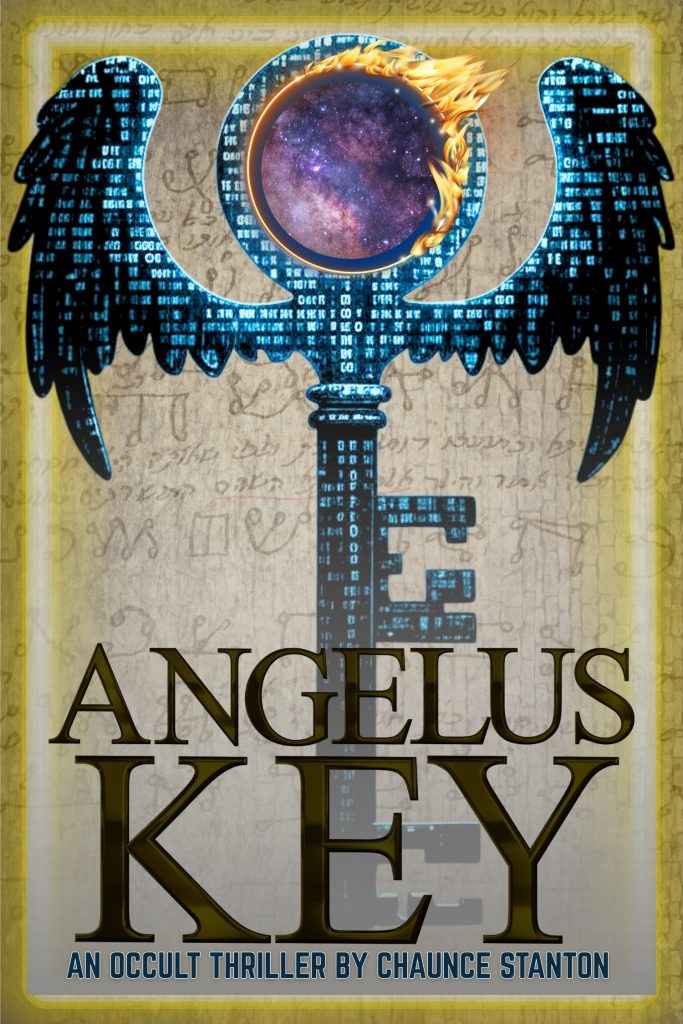
Go to the Light! Try THE ANGELUS KEY
Need to find a little ray of hope? Or just wash your brain in a worldview that allows for spiritual redemption? The prescription is THE ANGELUS KEY.
If Yellowjackets leaves us asking what we’re truly surviving for, then that question haunts the pages of my novel, The Angelus Key, as well. Though set in a different world—one of cryptic manuscripts, esoteric orders, and the spiritual technologies of a forgotten age—it wrestles with similar themes: what happens when we mistake power for truth, when we serve a force we don’t fully understand? If you’re intrigued by hidden knowledge, mysticism, and the fragile boundary between salvation and delusion, The Angelus Key may be your next descent. After all, the most dangerous rituals are the ones we perform without knowing who’s watching.